Perfectly Imperfect: How Amateur Creators Are Charging Studio Prices for Shaky Cameras and Real Moans
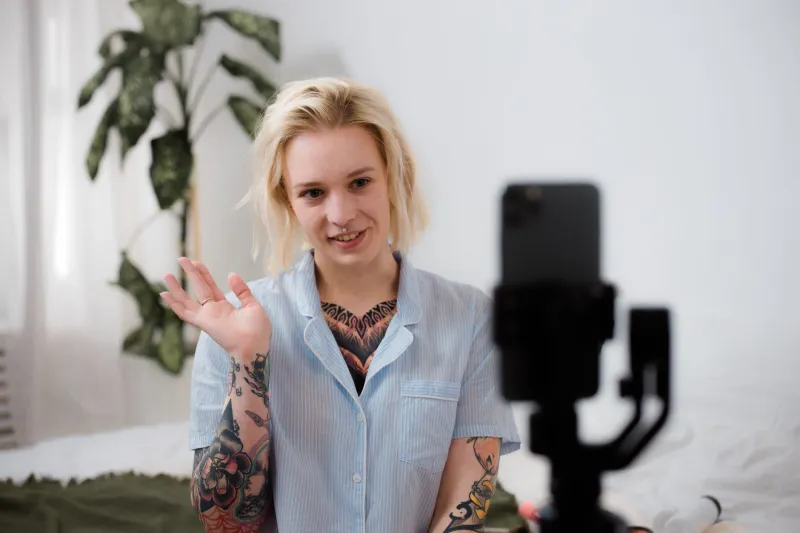
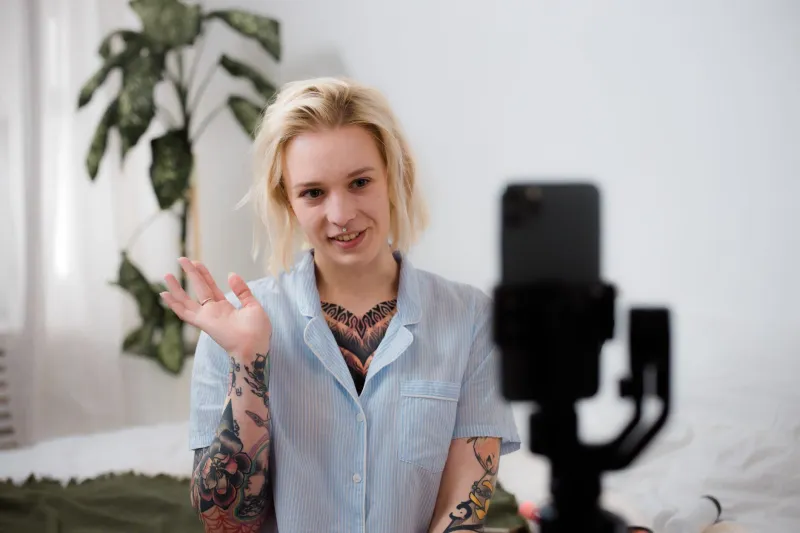
There's a weird thing happening in adult content right now, and if you've been paying attention, you've probably already felt it in your own viewing habits. The glossy, hyper-produced stuff — the kind with ring lights, professional camera operators, and color-graded everything — is getting passed over. Meanwhile, the creator who films herself on an iPhone propped against a stack of paperback novels? She's pulling in six figures.
This isn't a fluke. It's economics. And it's reshaping the entire landscape of how adult content gets made, priced, and consumed.
The Illusion Problem with Professional Production
High-budget adult studios spent decades perfecting a visual language: perfect bodies in perfect lighting doing perfect things in perfect sequence. And for a long time, that formula worked because it was the only game in town. Audiences didn't have an alternative — they took what was available.
Then the internet happened. Then smartphones happened. Then platforms that let anyone upload anything happened. Suddenly, viewers had a choice — and they started making a pretty surprising one.
The problem with studio productions, it turns out, is the same thing that makes them technically impressive: they feel manufactured. Every moan is timed. Every camera angle is calculated. Every performer is playing a role inside a role. Viewers aren't stupid — they can feel the artifice, even if they can't always articulate it. And increasingly, that feeling is a turnoff.
"You can tell when someone is acting versus actually into it," says one independent creator who asked to be identified only as Dani. She spent two years doing work for a mid-level studio before going solo on a subscription platform. "The studio stuff paid okay, but my fans now pay more per month than I ever made per scene. And all I did was stop pretending."
What Fans Are Actually Buying
Here's the psychological core of the authenticity premium: people aren't just buying content, they're buying connection. Or at least the feeling of it.
Research on parasocial relationships — the one-sided emotional bonds audiences form with media personalities — shows that perceived authenticity dramatically increases how invested someone becomes in a creator. The more real a person feels, the more emotionally attached fans get. And emotionally attached fans spend money.
This is why the shaky camera isn't a bug. It's a feature. It signals: this is real, this person is real, what you're seeing actually happened. The production imperfections function as proof of authenticity. They're the adult content equivalent of a restaurant with mismatched chairs that serves incredible food — the roughness is the credibility.
Studios, for all their technical excellence, can't fake that. They've spent too long optimizing for the opposite.
The Pricing Math That Shouldn't Work But Does
Let's talk numbers, because this is where it gets genuinely fascinating.
A mid-range studio production costs anywhere from $5,000 to $30,000 to produce a single polished scene — crew, equipment, location, post-production, the works. That content then gets distributed through platforms that take significant cuts, and the individual performers typically see a flat rate, often a few hundred to a couple thousand dollars.
Contrast that with an independent creator who shoots on a consumer camera or phone, edits on a laptop, and uploads directly to a subscription platform. Her production costs might be $200 a month total. But her pricing? Subscriptions at $25–$40 per month, custom content requests at $100–$500 a pop, tips that roll in during live sessions.
Multiply that across even a modest subscriber base of a few thousand dedicated fans, and you're looking at income that makes studio economics look embarrassing.
The key insight is that scarcity and access are priced differently than polish. When you subscribe to an independent creator, you're not just buying content — you're buying proximity. You're buying the sense that this person made this for you, or at least for people like you. Studios fundamentally cannot sell that.
Creators Who Made the Jump
The migration from studio work to independent creation has become one of the defining career moves of this decade in adult entertainment. And the creators who've made the switch tend to describe it in similar terms: terrifying at first, then liberating, then financially transformative.
Marco, a performer who spent three years working with two different production companies on the West Coast, describes the transition as "learning to stop apologizing for being a person."
"In studio work, you're optimizing for the camera," he explains. "Everything is about angles and lighting and hitting marks. When I went independent, I had to relearn how to just... exist on camera. Be awkward sometimes. Laugh when something goes sideways. That stuff used to get edited out. Now it's what my subscribers DM me about."
He reports that his monthly income as an independent creator is roughly three times what he made doing studio work, despite producing technically inferior content by any conventional standard.
The Strategy Behind Selling Imperfection
None of this happens by accident. The creators who successfully monetize authenticity are doing something deliberate — they're constructing a specific kind of intimacy and then pricing it accordingly.
Some of the most effective tactics:
Controlled imperfection. The best independent creators aren't actually just winging it. They're thoughtful about which imperfections to leave in. A nervous laugh stays. A genuinely awkward moment stays. But they still understand framing, they still understand pacing. The rawness is curated, even if it doesn't look that way.
Access tiering. Behind-the-scenes content, unedited versions, direct messaging — these get priced at premium tiers precisely because they feel more real than the polished content. The more "private" something feels, the more fans will pay for it.
Consistency over perfection. Amateur creators who win long-term are the ones who show up regularly, not the ones who produce occasional masterpieces. Fans are subscribing to a person, and people have schedules and habits. Irregular posting breaks the parasocial bond.
Narrative continuity. Unlike studio content, which is episodic and disconnected, independent creators build ongoing stories. Fans know about their lives, their moods, their bad days. That context makes the content feel richer without requiring any additional production investment.
What This Means for the Industry
Studios aren't going to disappear — there's still an audience for high-production-value content, and always will be. But the economics have shifted enough that the old model of "bigger budget equals bigger returns" simply doesn't hold anymore.
The authenticity premium is real, it's measurable, and it's only getting more pronounced as audiences become more sophisticated about what they're actually looking for when they open their wallets. Independent creators figured this out first. The rest of the industry is still catching up.
At FikFap, we see this play out every day — the creators who connect are the ones who show up as themselves, rough edges and all. Turns out, that's worth a lot more than anyone expected.