Rough Edges Pay Better: The Raw Content Revolution Leaving Polished Studios in the Dust
There's a running joke among veteran adult content producers that goes something like this: spend $3,000 on a studio shoot, watch it underperform. Film something on your phone at 11pm with bad lighting and zero script, watch it go absolutely feral. The joke isn't really a joke anymore. It's a business model.
Across the adult creator economy, a pattern has emerged that's confusing marketers, frustrating production houses, and making a certain breed of DIY creator extremely wealthy. Raw, imperfect, unscripted content — the stuff that looks like it almost didn't get made — is consistently outperforming high-budget productions on nearly every meaningful metric. Engagement, subscriptions, tips, retention. The numbers keep telling the same story.
So what's actually going on here?
The Psychology of the Unfiltered Moment
Human brains are remarkably good at detecting performance. We've evolved over millennia to read subtle cues in faces, voices, and body language — and that instinct doesn't switch off when someone opens a browser tab. When content feels staged, something in the viewer's subconscious registers it, even if they can't articulate why. The effect is a kind of emotional distance. You're watching, sure. But you're not with the person.
Authentic content collapses that distance. A creator who stumbles over their words, laughs unexpectedly, or has a moment of genuine surprise creates an involuntary sense of intimacy. The viewer's brain essentially says: this is real, this person is real, and I am somehow part of this moment. That neurological hook is incredibly powerful — and it's nearly impossible to fake convincingly, which is the great irony of the whole thing.
Dr. research aside, the people actually living this reality are the creators themselves, and their experiences are remarkably consistent.
"I Stopped Trying and Started Making Money"
Take creators who've been in the game long enough to have tried both approaches. A common story sounds something like this: early days involved investing in equipment, learning editing software, studying lighting tutorials, trying to look "professional." The content was technically competent. It also barely moved the needle.
The turning point, for many, comes by accident. A phone video filmed quickly, no setup, maybe a little nervous energy still visible — and suddenly the messages flood in. Subscribers commenting that it felt different. That they felt like they were actually there. Tips arriving from people who've been quiet for months.
Creators who've leaned into this describe a shift that's equal parts liberating and disorienting. You spend so long thinking polish equals value, and then the market tells you very clearly that it doesn't. At least not in the way you assumed.
What audiences are actually paying for, it turns out, isn't production quality. It's presence.
Platform Data Is Screaming the Same Thing
Engagement analytics across adult platforms paint a consistent picture. Content with lower production values but higher perceived authenticity tends to generate longer average watch times, more repeat views, and significantly higher comment and tip rates. The correlation isn't subtle.
One pattern that shows up repeatedly: real-time reaction content — where creators respond to prompts, messages, or situations in the moment — outperforms pre-planned scripted content by a wide margin. Audiences aren't just consuming; they're looking for evidence that someone is genuinely present with them.
This has massive implications for how creators should be thinking about their time and money. Hours spent on post-production editing might actually be removing the value that was captured in the raw footage. The nervous laugh that got cut? That was the good part.
The Authenticity Arms Race (And Why You Can't Fake It)
Predictably, once word got out that "authentic" content converts better, some creators and studios tried to manufacture it. Deliberately shaky camera work. Scripted "mistakes." Rehearsed spontaneity. And audiences, with their finely tuned authenticity detectors, saw through it almost immediately.
This is actually good news for genuine creators. Authenticity, real authenticity, is one of the few things in the content economy that can't be easily replicated at scale. A major studio can copy your lighting setup. They can't copy your actual personality, your real nervous energy, or the unscripted moment that makes a subscriber feel like they know you.
The creators winning this game aren't necessarily the most conventionally attractive, the most technically skilled, or the most experienced. They're the ones who've figured out how to be genuinely themselves on camera — comfortable with their own imperfections, willing to let the weird moments breathe instead of cutting around them.
What This Means for Your Content Strategy
If you're a creator trying to figure out where to put your energy, the data suggests some counterintuitive priorities.
Stop over-editing. That 45-minute editing session smoothing out every pause and awkward transition might be scrubbing out exactly what your audience came for. Try releasing something closer to raw and watch how your audience responds.
Lean into the unplanned. When something unexpected happens during filming — a sound from outside, a moment of genuine laughter, a real reaction to something — don't cut it. Those moments are often what subscribers screenshot and share.
Consistency beats perfection. A creator who posts frequently with modest production quality will almost always outperform someone who posts rarely but beautifully. Frequency builds relationship. Relationship builds revenue.
Talk to your audience like a person. The creators generating the most passionate fan responses aren't delivering polished monologues. They're rambling a little, catching themselves, going off on tangents. It sounds like a conversation, because it is one.
The Bigger Picture
There's something culturally significant happening here that goes beyond content strategy. Audiences — particularly in the US, where parasocial relationships with online creators have become genuinely mainstream — are increasingly skeptical of anything that feels produced for them rather than shared with them. The aesthetic of authenticity has become the dominant aesthetic, full stop.
For adult creators, this is a genuinely leveling development. The barrier to entry for "high production value" content is expensive and time-consuming. The barrier to entry for being genuinely yourself on camera is, theoretically, zero. The playing field hasn't completely flattened, but it's tilted in a direction that rewards personality over polish in a way it never quite has before.
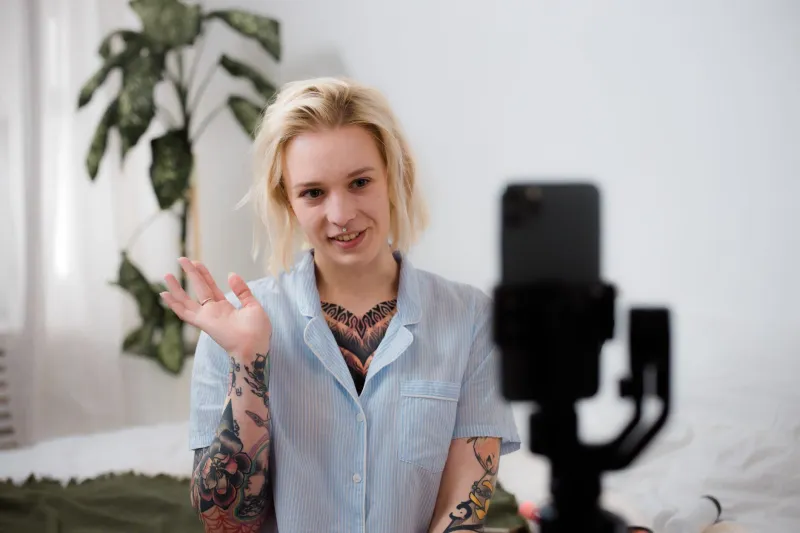
The studios with the big budgets aren't going anywhere. But the creator filming in their bedroom with one lamp and a phone propped against a stack of books? They might be printing more money than anyone in that studio wants to admit.