Scan, Submit, Surrender: What Adult Platforms Are Really Doing With Your Identity Data
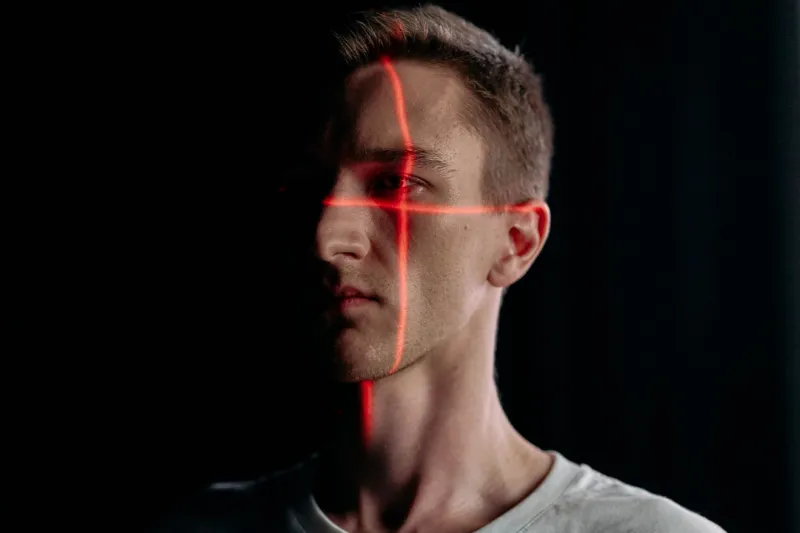
You upload a photo of your driver's license. Maybe a selfie. Maybe a live facial scan. The platform says it's for age verification, for safety, for compliance. And then — nothing. You get your access, you move on, and you never think about that data again.
But the platform does.
The Compliance Cover Story
Age verification requirements have been expanding across the US for the past few years. States like Louisiana, Utah, and Texas have passed legislation requiring adult sites to confirm user ages before granting access. On paper, this is a reasonable policy goal — nobody's arguing that minors should have unrestricted access to adult content. But the mechanics of how platforms implement verification have opened a backdoor that most users never see coming.
The problem isn't verification itself. It's the ecosystem that's grown around it.
Most platforms don't build their own verification infrastructure. They outsource it to third-party vendors — companies with names you've probably never heard of, operating under terms of service that most users skip straight past. These vendors collect your data on behalf of the platform, and their own privacy policies govern what happens next. That's where it gets murky.
Who's Actually Holding Your ID Scan Right Now
Companies like Yoti, AgeID, and a rotating cast of lesser-known compliance vendors have carved out a lucrative niche in the adult industry's verification pipeline. Some are reputable. Some are not. And even the reputable ones operate within a legal framework that permits far more data sharing than most users would ever consent to if the options were spelled out clearly.
Here's what those terms often allow:
- Retention of biometric data for periods ranging from 90 days to indefinitely, depending on jurisdiction and contract terms
- Sharing with affiliated data brokers for identity verification purposes — a category broad enough to include marketing analytics
- Aggregated behavioral profiling that doesn't technically violate anonymization rules but still builds a detailed picture of your usage patterns
- Government data requests that the platform may be legally prohibited from disclosing to you
For creators, the exposure is even deeper. You're not just submitting a one-time ID scan — you're often providing bank account information, tax identification numbers, and ongoing biometric data for content moderation compliance. That's a comprehensive financial and biological profile tied to your real identity.
The Creator Risk Is Different — and Worse
Viewers face data exposure. Creators face data exploitation.
When you onboard as a creator on any major adult platform, you're building a dossier that includes your legal name, address, payment details, and often a continuous record of the content you produce. Platforms use this to enforce their terms of service — fair enough. But they also use it to benchmark your performance, flag your account for review, and in some documented cases, share anonymized (but traceable) creator data with advertising partners and analytics firms.
The real danger comes when that data leaks — either through a breach or through the platform's own monetization decisions. Adult content creator data is uniquely sensitive. A leaked database connecting real identities to creator accounts doesn't just expose financial information. It exposes people's private lives, their relationships, their employment.
What "Anonymized" Actually Means (Hint: Not Much)
Platforms love the word "anonymized." It implies your data has been scrubbed clean, rendered harmless, disconnected from your real identity. In practice, research has repeatedly shown that anonymized datasets — especially those including behavioral patterns, device fingerprints, and location data — can be re-identified with surprisingly little effort.
A 2019 study from MIT found that just four data points were enough to uniquely identify 95% of individuals in a supposedly anonymized mobility dataset. Adult platform data is richer than mobility data. The anonymization promise is thinner than the platforms want you to believe.
Practical Steps to Limit Your Exposure
You can't opt out of verification entirely if you want to use these platforms. But you can minimize the blast radius.
For viewers:
- Use a dedicated email address that isn't connected to your real identity for platform accounts
- Consider a VPN from a reputable provider to mask your IP during verification processes — though be aware some platforms flag VPN traffic
- Read the verification vendor's privacy policy specifically, not just the platform's
- Check whether your state has a biometric privacy law (Illinois, Texas, and Washington have the strongest protections) and understand your rights under it
For creators:
- Before onboarding, research the platform's verification vendor and look up their data retention policies independently
- Use a business banking account and EIN instead of personal accounts and SSN where legally permissible
- Document everything you submit and keep records of what data each platform holds on you
- Periodically submit data deletion requests where applicable — CCPA gives California residents meaningful rights here
- Consider consulting a privacy attorney before signing with any platform that requires biometric submission
The Regulation Gap Nobody's Closing
Here's the uncomfortable truth: the US has no comprehensive federal privacy law. The patchwork of state regulations means that what protects you in California might mean nothing in Florida. Adult platforms are acutely aware of this and often structure their data operations to take advantage of the most permissive jurisdictions.
The age verification laws being passed across red and blue states alike are largely focused on who can access content, not on what happens to the data collected in the process of confirming that access. That gap is enormous, and the industry is living in it.
Until federal legislation catches up — and don't hold your breath — the burden falls on individual creators and viewers to protect themselves. Verification isn't going away. The data machine built around it isn't slowing down. What you do with that information is the only variable you actually control.
Stay sharp. Read the fine print. And remember that every scan you submit is a transaction — even when nobody tells you what you're trading.